


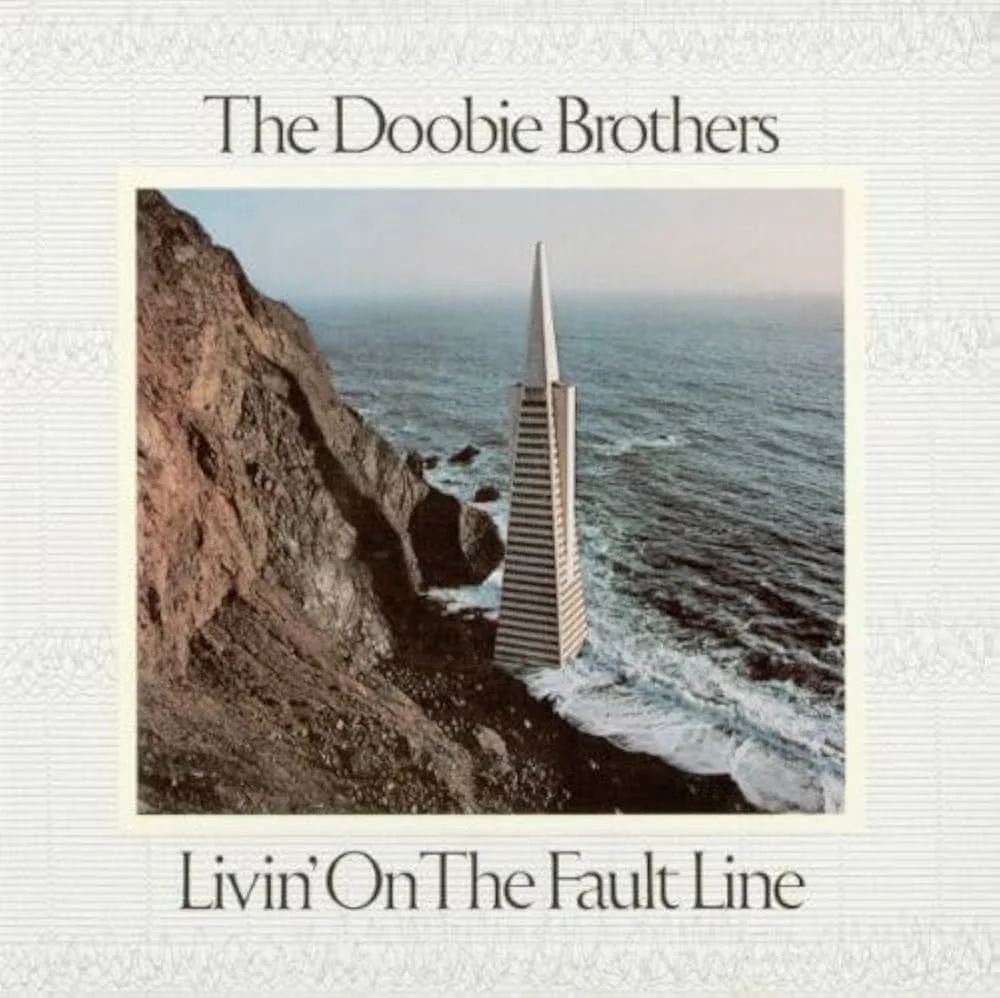
Living On The Fault Line (1977)
Bass, backing vocals
Wrote “Need a Lady” and plays bass and lead vocals
Living on the Fault Line I loved but it was largely ignored. It was a transition album for us as a band. Going from our first album with Michael and then dropping into creating Fault Line was a letting go and allowing ourselves a new creative freedom. The vocals on this album are front and center and the whole album really highlighted where we were as a newly formed band and our collective harmonies and instrumentation. The recording is another great feat by our engineer Don Landee.
I wrote the song “Need a Lady”. Michael, Keith and I played the basics, and I sang the harmonies myself. Dan Armstrong happened to be in the studio when we were recording and so I asked him if he wanted to play a solo on it with his electronic sitar. He had made all kinds of electronic instruments, amplifiers and effect boxes. What I remember him most for were his plexiglass guitars and basses. The six single coil pickups on them were made by Dan and Bill Lawrence. Those pickups have the tone of life! They were so cool.
Jeff Baxter sharing his thoughts about Living on The Fault Line:
“It’s probably the best album The Doobie Brothers ever made. It’s so deep. It showed the level of musicality and depth of everyone in that band and what they could do when given complete freedom. It’s pretty amazing and more and more people are going back to listen to it and saying “woah!” I don’t think the Minute by Minute album would have been the quality and success that it was if the band hadn’t passed through Living on the Fault Line. Nobody had a problem and we found our potential. Recording that album was the ultimate freedom of expression. It was a tremendous group effort with everybody respecting one another and seeking each other's input. And it worked because we had all played together enough and were comfortable together. We had reached a level of sophistication and complexity with that album. They are synonymous, sophistication and complexity, but we never lost the band within that. It’s not like free form jazz where most people are just struggling to keep up. And because of Tiran’s playing we never got lost in the complexity. With Tiran’s bassline there was always an underlying groove and musical familiarity that captured the attention of a listener. So, no matter what was built on top of it, it had a good fundamental foundation and was melodic. Tiran was able to keep it in the group.”